Concrete steps construction in Chino CA - a solid, safe way up to your front door
Cracked, sinking or crumbling front steps? We build new concrete steps on solid support, with a surface that gives your feet some grip.
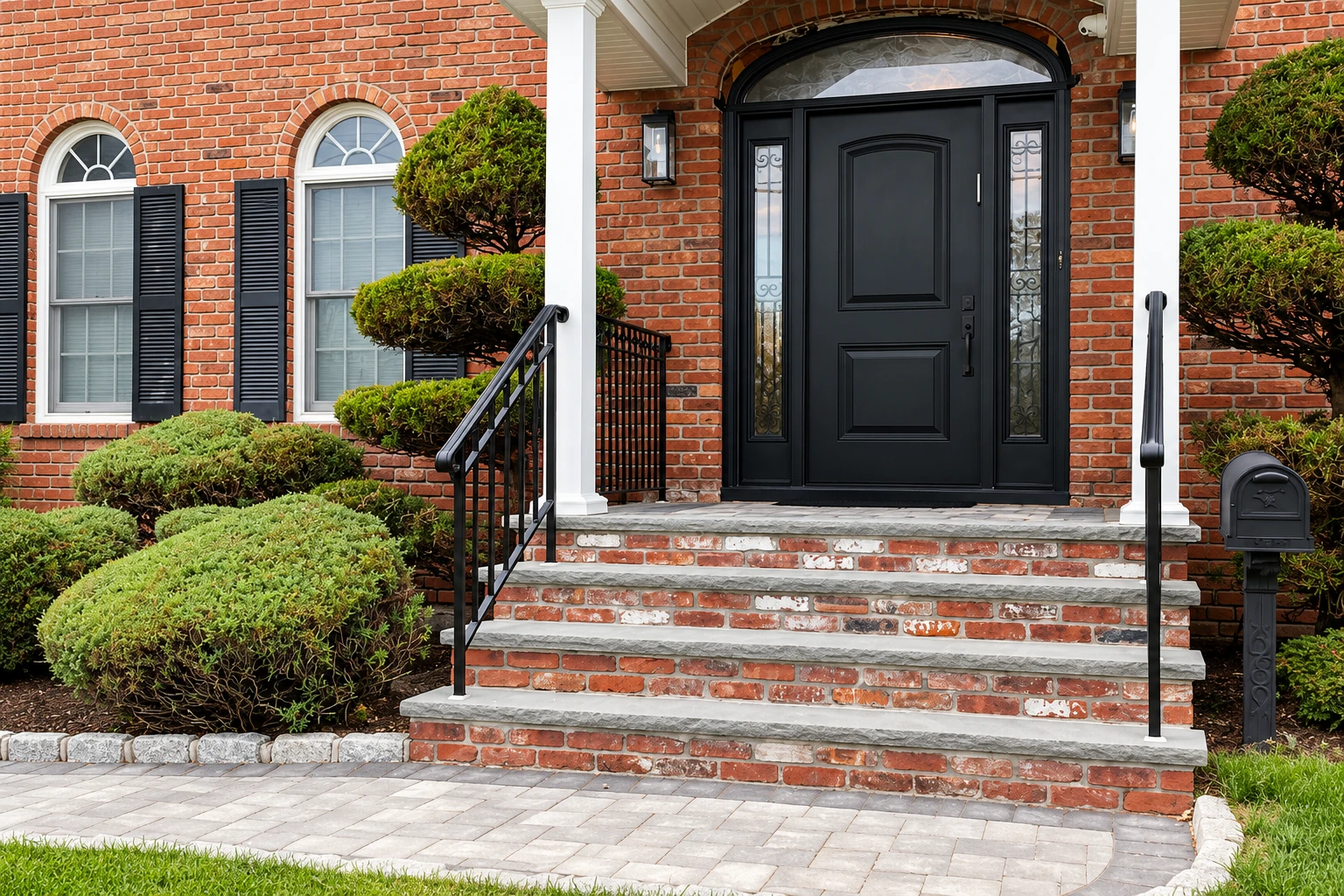
What goes into building new concrete steps?
Concrete steps construction in Chino means one of two things, setting a precast set that's made before it's delivered or pouring new steps in place at your house, using temporary molds called forms. Either way, you end up with a solid, even way in and out of the house.
Most step calls start with something you can see, like a crack across a tread, a step pulling away from the door or an edge chipping off until somebody catches a toe on it. Once steps have dropped or split, patching usually just buys time, so I'll tell you straight if new ones are the better spend. If the walk leading up to them is in the same shape, our sidewalk building work can go in at the same time.
The price mostly turns on precast versus poured, how many steps you need, what has to be torn out first and whether the new steps tie into a landing or the house. The schedule turns on whether the city needs to inspect and on curing, the stretch fresh concrete needs to gain strength before you put weight on it. Your written estimate puts a price on your job, so you're not guessing.
- Tearing out old cracked, sinking or crumbling steps and hauling the broken concrete away.
- Front entry, back door, garage and patio steps, from a single step to a full set.
- Tying new steps into an existing landing, porch slab, walkway or foundation where they meet.
What happens after you call about new steps?
I come out to every job myself, and my crew and I do the work. Here's how a steps job usually runs, so you know what's coming and when.
Call or send the form
Tell us where the steps go, how many there are now and whether they're your main way into the house. We'll set a time for me to come out.
I look at your entry
I look at what the steps will sit on and what they tie into, and we talk through precast or poured for your door. Then you get a written estimate, and if the job needs a scanning company or an engineer, I'll say so up front.
We plan before we pour
Before we pour, we go over the plan, the prep and anything the city needs, and if there's a permit we build the schedule around its inspections. A call to the city's inspection line before 3 pm gets an inspection the next day, and we time the work around that.
Pour, finish and clean up
On pour day my crew and I stay on it until the steps are finished and the site's cleaned up. The new steps still need time to cure after that, so I'll tell you when they're ready to use.
Concrete steps, slabs and walkways from start to finish
These photos show the kind of concrete work this page covers, from forms going up to finished, textured surfaces. They're examples of the trade, so use them to picture your options before we talk about your entry.
Tan stamped concrete patio features a repeating rectangular stone pattern beside a grassy lawn and pond.
Exposed-aggregate concrete driveway with straight expansion joints leads to a tan garage door on a brick house.
A multicolored stamped concrete patio beneath a screened pavilion overlooks a pond and homes.
Stamped concrete patio with a tan patterned surface and wooden porch swing beside a brick house.
Wide stone-look concrete steps lead up to a covered home's entrance, with matching paving across the porch.
Close-up of a gray, broom-textured concrete driveway divided by straight control joints.
Get a written estimate for your new concrete steps
Send the form or call (909) 479-6302 and we'll get back to you within one business day to set up a free on-site estimate, no obligation. Mention whether these steps are your usual way in.
(909) 479-6302Questions Chino homeowners ask about concrete steps
These are the questions I hear most about new concrete steps in Chino, from precast versus poured to permits and licensing. If yours isn't here, ask me when I come out to look.
Are precast concrete steps cheaper than poured steps?
They can be, when a ready-made set fits your entry and goes in without much extra work, because less concrete work happens at your house. Custom sizing, delivery, lifting the set into place and the support underneath can eat up that saving, so compare the full installed price of each before you pick.
Do poured concrete steps last longer than precast?
Not because of how they're made, since neither kind can be counted on to outlast the other on method alone. That means you can choose on fit and the full installed price without trading away years, and what's under the steps matters more than which kind you pick.
Who issues building permits in Chino?
Chino's Building Division issues building permits and takes in plans for review, and its inspectors cover homes and commercial buildings alike. Inspections are booked through the city's inspection line, 909-334-3252. When it isn't clear whether your steps need a permit, we check with the city first.
Does a small concrete steps job need a licensed contractor in California?
Yes, under California's rule for small jobs, if the work needs a permit of any kind or the person doing it hires even one helper, and that holds even when the job costs less than $1,000. So a small price doesn't settle the license question on its own. We're licensed and insured, so that part's covered.
What causes concrete steps to crack and sink?
Usually it's what's under them, because steps set on dirt that was raked level instead of dug out and packed settle right along with it. Water draining toward the steps or the house and concrete poured in the heat of the day, which can leave a weak, dusty top, add to the trouble, so we check where the water runs and when we pour.
How do I get in and out of my house while new front steps are built?
We settle that with you before any work starts, because agreeing on another way in ahead of time beats finding out on demo day. If there's a side or back door, that's usually the answer, and if not, we walk through the timing so you know what to expect.
Concrete steps construction in Chino and nearby cities
A Chino permit goes in the licensed contractor's or owner's name, and that holder answers for the work, so if your steps need one we settle whose it is first. We build steps in cities like Chino Hills and Ontario.